How Much Does a Pole Barn Cost in Spokane, WA?
Real planning ranges for kit, turnkey, and finished post-frame buildings in Spokane County and North Idaho, plus the factors that move a specific project up or down from the baseline.
2025 to 2026 cost ranges
Pole barn pricing spans a wide range because "pole barn" covers everything from a bare kit shell to a fully finished, insulated building. The planning ranges below are per square foot, before site work, foundation, or permit fees, and reflect current Pacific Northwest post-frame market conditions rather than a quote for a specific project.
| Build Level | Cost per sqft | What's Typically Included |
|---|---|---|
| Kit / DIY shell | $15 to $35 (higher-spec kits $40+) | Posts, trusses, purlins, siding, and roofing materials, self- or builder-assembled |
| Turnkey basic | $35 to $75+ | Full shell construction, labor, and typical site work by the builder |
| Finished / insulated | $80 to $150+ | Insulation, interior finish, electrical, and other build-out beyond the shell |
For directional context, Kootenai County's own permit valuation schedule lists roughly $21.33 per square foot for unfinished space versus $97.95 per square foot for finished space. That's a permit valuation figure used for fee calculation, not a market price, but it points the same direction as the ranges above: finish level is the single biggest cost driver.
What drives cost up or down
Size is the obvious factor, but it's rarely the only one that matters. Snow and wind load engineering add cost as the design requirement climbs, which is why a rural site at higher county elevation can price higher than the same footprint in the valley. Finish level (bare shell versus fully insulated and wired) is typically the largest swing factor of all. Site prep, including grading, gravel or concrete work, and utility runs, varies enormously by lot. Foundation choice, whether posts set directly in the ground or on isolated concrete footings, changes both cost and long-term durability. Door and window count, and how far the site sits from suppliers and crews, round out the list.
A flat, already-graded residential lot inside Spokane or Spokane Valley city limits is close to the cheapest starting condition for site work, since utilities are typically nearby and access is straightforward. A sloped rural parcel in the county, especially one that needs a new gravel driveway, tree clearing, or a longer utility run from the road, adds cost before the building itself even starts. It's worth getting a site walk from a builder early, since a low per-square-foot building estimate that ignores site conditions isn't a useful number to plan around.
Kit versus turnkey inclusions
A kit is a materials package: the structural components, siding, and roofing, delivered to the site for the buyer or a hired crew to assemble. Site work, foundation, and labor are priced separately and can add substantially to the kit price by the time the building is usable. Turnkey means the builder handles the whole project, from site prep through a finished shell or full interior build-out, for one coordinated price and timeline.
A kit route can make sense for an owner with construction experience or an existing relationship with a local crew who just needs materials. Turnkey tends to make more sense for anyone who wants one point of contact and one contract covering the whole build, since coordinating a kit delivery with separately hired site work and labor adds project management the owner has to handle personally.
Spokane versus North Idaho pricing
Snow load and permitting differences between the two states show up in the final number. Spokane County's 39 pounds per square foot ground snow load sets a consistent baseline for most projects, while North Idaho snow load requirements vary more by specific jurisdiction and elevation, which can mean more engineering time on the Idaho side of a project. Permitting costs and timelines also differ: Spokane's BP-14 pathway is a defined, published process for qualifying non-engineered buildings, while Kootenai County's rules depend more on whether the site sits inside a city or in the unincorporated county. Neither state's process is inherently cheaper across the board; the actual difference comes down to the specific parcel, its jurisdiction, and its elevation. See the service area page for the county-by-county detail.
Get an accurate quote
These ranges are a planning tool, not a bid. The only way to get an accurate number is a conversation about your specific building type, size, site conditions, and finish level with a local, licensed builder. Sharing rough dimensions, intended use, and your property's location up front, whether that's a Spokane Valley residential lot or acreage out toward Deer Park or Coeur d'Alene, lets a builder skip the generic range and start with numbers that actually apply to your site.
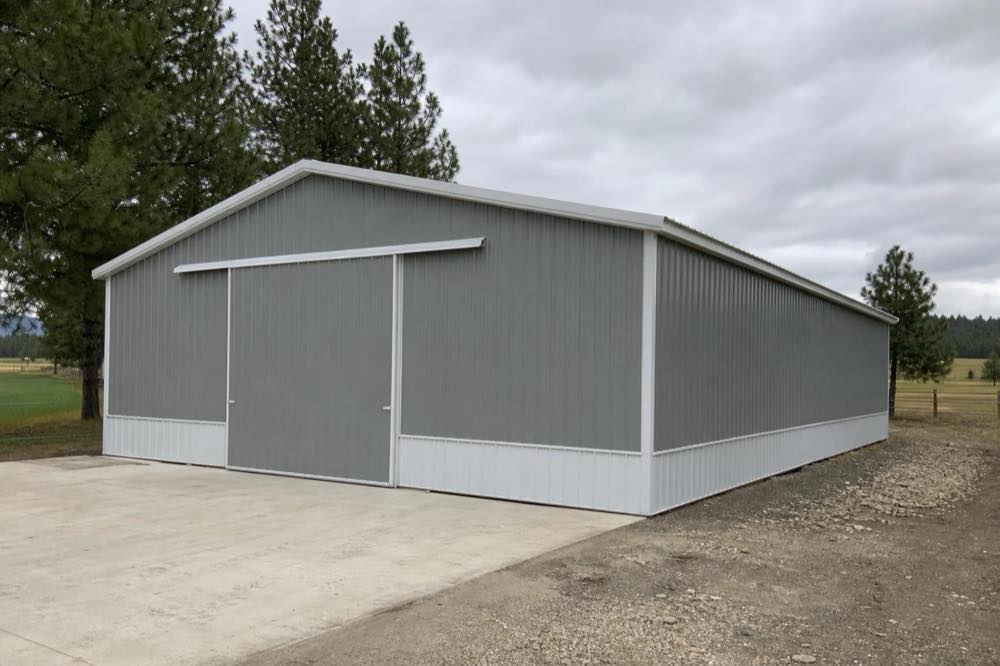
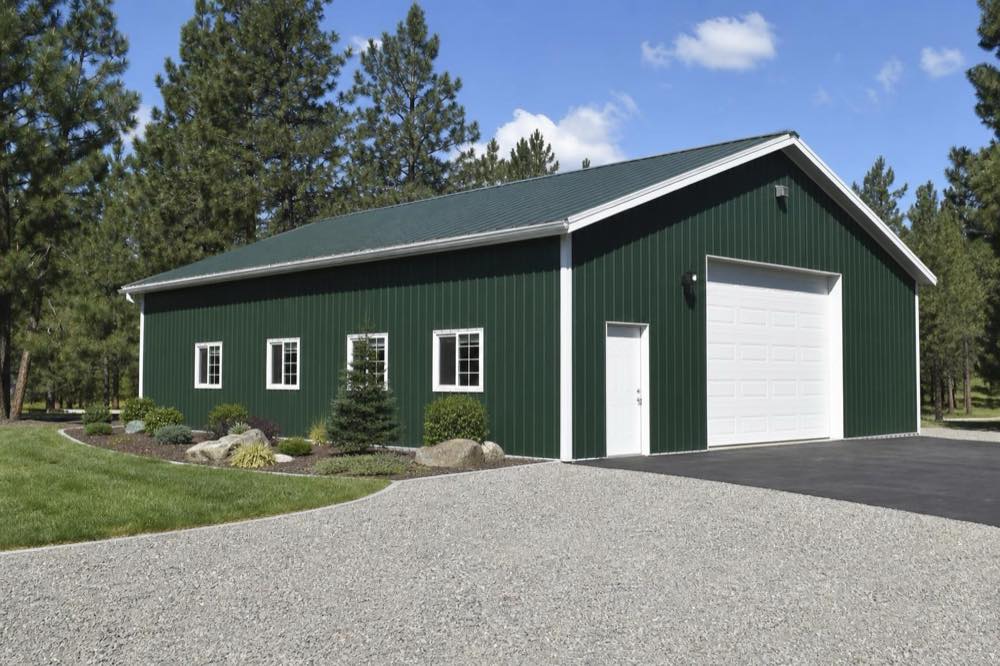
Get a real number for your project
Tell us the building type, size, and location, and a local post-frame builder will follow up with project-specific pricing.
Cost questions, answered directly
How much does a 40x60 pole barn cost?
A 40-foot by 60-foot building is 2,400 square feet. Applying the general planning ranges, a kit-only shell would run roughly $36,000 to $84,000, a turnkey basic building roughly $84,000 to $180,000-plus, and a finished, insulated building roughly $192,000 to $360,000-plus, before site work or foundation costs. These are planning ranges, not a quote.
What's included in a kit versus a turnkey pole barn?
A kit is a materials package, usually the post-frame shell components (posts, trusses, purlins, siding, and roofing), delivered for the buyer or a builder to assemble, with site work, foundation, and labor priced separately. Turnkey means the builder handles the full project, from site prep through a finished shell or interior, for one coordinated price.
Why do pole barn costs vary so much?
Size and finish level drive most of the variation: a bare shell and a fully insulated, wired interior can differ by four or five times per square foot. Beyond that, snow and wind load engineering, site prep and grading, foundation type, door and window count, and how far the site sits from suppliers all move the number up or down.
Does snow load affect pole barn cost?
Yes. Spokane's design snow load of 39 pounds per square foot ground, 30 pounds per square foot roof, directly drives post spacing, footing size, and truss engineering, all of which affect cost. A rural site at higher county elevation with a heavier snow load will generally cost more per square foot than the same footprint near the valley floor.
Is a pole barn cheaper than stick-built construction?
Generally yes for a comparable shell, since post-frame construction skips a continuous poured foundation and uses fewer, larger-spaced structural members. The cost gap narrows significantly once the building is fully finished and insulated to residential standard, which is part of why barndominium pricing lands closer to stick-built once a garage or basement is factored into the comparison.